Aluminium vs Stainless Steel Fabrication: Which Do You Need?
Should I use aluminium or stainless steel for my project in coastal New Zealand?
For most jobs, the choice comes down to weight, strength and where the finished part will live.
Aluminium is about a third of the weight of stainless steel and suits boats, frames and anything that gets lifted or moved. Stainless steel is stronger, copes with heat and wear, and is the standard for food-grade work. Near the sea, the grade matters as much as the metal, and that is where good aluminium and stainless steel fabrication starts.
Pick the wrong one and you can end up with a product that goes brown in its first summer or a frame twice as heavy as it needs to be.
Here are the questions we get asked most at ITSS Engineering in Warkworth.
Which is stronger, aluminium or stainless steel?
Stainless steel is stronger outright.
Grade 304 stainless has a tensile strength of at least 515 MPa, compared with about 310 MPa for 6061 aluminium.
Aluminium wins on strength for its weight. It weighs about 2.7 grams per cubic centimetre against roughly 8 for stainless, so an aluminium frame can carry a decent load at a fraction of the weight.
One thing to know: some aluminium grades lose a good share of their strength next to a weld. A good designer & fabricator designs the joints around that, or picks a grade that holds up better once welded.
Does aluminium or stainless steel handle salt air better?
Both can last for decades on the coast if you choose the right grade and look after it.
For stainless steel, 316 is the coastal grade. It contains 2–3% molybdenum, which 304 doesn’t, and that helps it resist salt. The Australian Stainless Steel Development Association recommends 316 as the minimum within 5 km of surf.
For aluminium, 5083 is the marine grade used for boat hulls, tanks and welded work around salt water. Aluminium also forms its own thin protective layer on the surface, and anodising or powder coating adds more protection.
If you’re not sure how exposed your site is, BRANZ Maps shows the corrosion zone for any NZ address.
Why does stainless steel go brown near the beach?
That brown film is called tea staining.
It’s cosmetic and doesn’t weaken the metal, but it looks less ideal on a balustrade or marine applications.
Salt sits on the surface and stays damp, so the steel stays wet for longer than you’d think.
The usual causes are:
- 304 stainless used too close to the sea
- A rough surface finish that holds salt
- Ledges and flat spots where water sits
- Weld discolouration that was never properly cleaned off
Stainless steel fabrication done well prevents most of this: 316 grade, a smooth finish, a design with no water traps, and welds cleaned by pickling within the workshop, or passivation/ electropolishing outsourced. After that, regular rinsing with fresh water is imperative by the owner to keep it bright.
304 or 316 stainless: which do I need?
Use 304 for indoor and sheltered work away from the coast, such as benches, frames and general kitchen equipment.
Use 316 for anything outdoors near the sea, and for salty or acidic foods, brine or strong cleaning chemicals.
316 costs more than 304 because of its higher nickel and molybdenum content. On a coastal job it’s usually money well spent, because replacing stained or pitted 304 costs far more.
Which aluminium grade should I use?
ITSS keeps three common grades in stock: 5083, 6061 and 6082.
5083 is the marine grade. It suits welded work in or near salt water, like boat parts, tanks and hull plating, and it holds its strength well once welded.
6061 and 6082 are strong, heat-treated grades that machine cleanly. They suit frames, brackets and CNC machined parts.
6061 contains more copper than 6082, which is why it’s usually kept out of salt water.
Can you use aluminium and stainless steel together?
Yes, with care.
When two different metals touch and salt water gets between them, the aluminium corrodes faster. This is called galvanic corrosion.
BRANZ says the two can be used together safely inland and in sheltered areas, but direct contact is best avoided in high-exposure coastal zones. A few small stainless bolts in a large aluminium part is a low risk.
To keep them apart, fit nylon or neoprene washers and sleeves between the metals, and design joints so water can’t sit in them.
Which is cheaper, aluminium or stainless steel?
It depends how you measure it.
Aluminium can cost more per kilo, but it weighs about a third as much, so a part of the same size often works out cheaper in aluminium.
Labour matters too. Aluminium is harder to weld well, and 316 stainless costs more than 304.
The fairest comparison is the whole life of the part, including maintenance and replacement. The easiest way to compare is to ask for a price on both.
| ALUMINIUM | STAINLESS STEEL | |
|---|---|---|
| Weight | About a third of stainless | Heavy |
| Strength | Very good for its weight | Stronger outright |
| Near the sea | 5083, with a coating | 316 |
| Heat | Softens from about 200°C | Copes with high heat |
| Best used for | Boats, frames, tanks, ducting, light structures | Food equipment, benches, rails, fittings, hard-wearing parts |
How ITSS Engineering handles aluminium and stainless steel fabrication
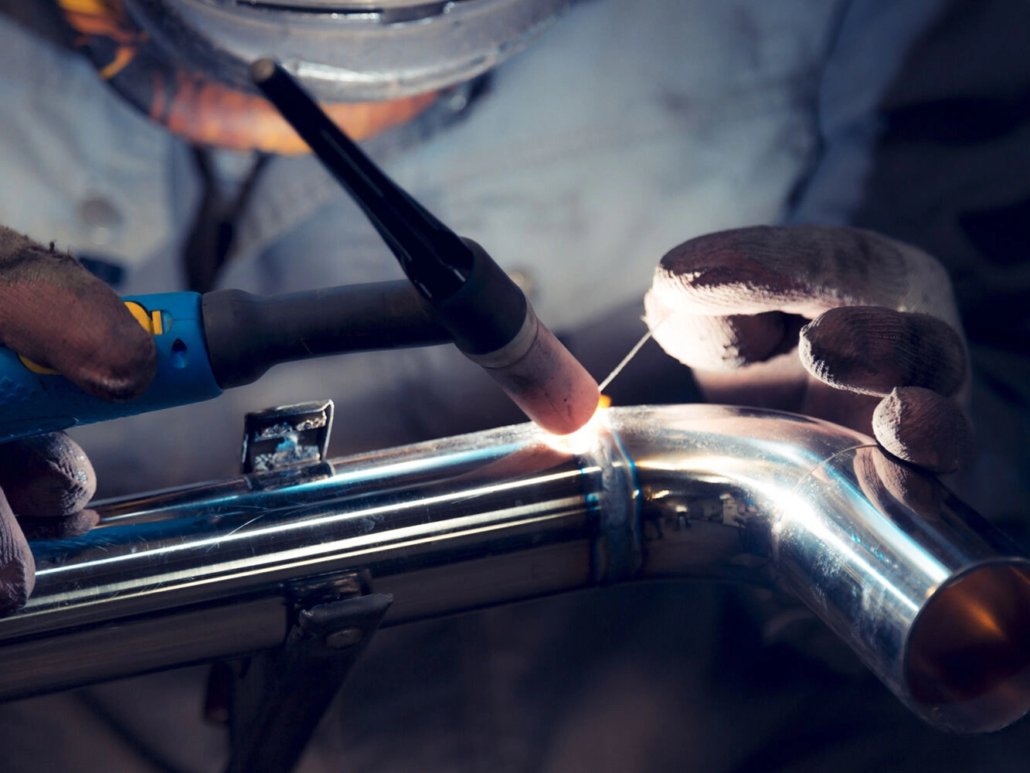
ITSS Engineering’s Warkworth workshop MIG, TIG and gas welds all aluminium grades, plus 304 and 316 stainless.
We keep stainless and aluminium sheet, flat bar and sections in stock, so jobs don’t wait on materials.
Typical work includes stainless frames, aluminium and stainless tanks, ducting, and repairs to aluminium parts. Our ITSS Lightfab team handles lighter sheetmetal work like custom sinks, benches, shower trays and flashings. Blasting and painting is generally done at our workshop, with anodising and galvanising outsourced through trusted partners.
Our team of more than 60 tradespeople works to SFC Category 3, ISO 9001.
Not sure which metal suits your job?
Talk to the ITSS Engineering team in Warkworth about your aluminium and stainless steel fabrication project.
Frequently asked questions
Does aluminium rust?
No. Rust is iron oxide, and aluminium contains no iron. It can still corrode in salt water, especially uncoated or touching other metals, so marine grades and coatings matter.
Does stainless steel rust?
It can stain and pit, especially 304 near the sea. 316 with a smooth, properly cleaned finish and regular fresh-water rinsing stays bright for much longer.
Is aluminium harder to weld than stainless steel?
Generally, yes. Its surface layer melts at about 2,037°C while the metal melts at about 660°C, and it pulls heat away fast. That takes the right TIG setup and experienced welders.
Which is better for a coastal balustrade?
Both work. Powder-coated or anodised aluminium is lighter and usually costs less, while 316 stainless gives a premium look but needs regular rinsing to avoid tea staining.
Which stainless steel is food grade?
Both 304 and 316 are widely used for food contact. 316 is the better pick for salty or acidic foods, brine and strong cleaning chemicals.
How often should I wash metalwork near the sea?
Suppliers commonly recommend a fresh-water rinse every three to six months, and more often within about 1 km of the sea. Use a hose and a soft brush, not a waterblaster, on coated surfaces.