What Actually Happens Before a Crane Lift? What you need to know!
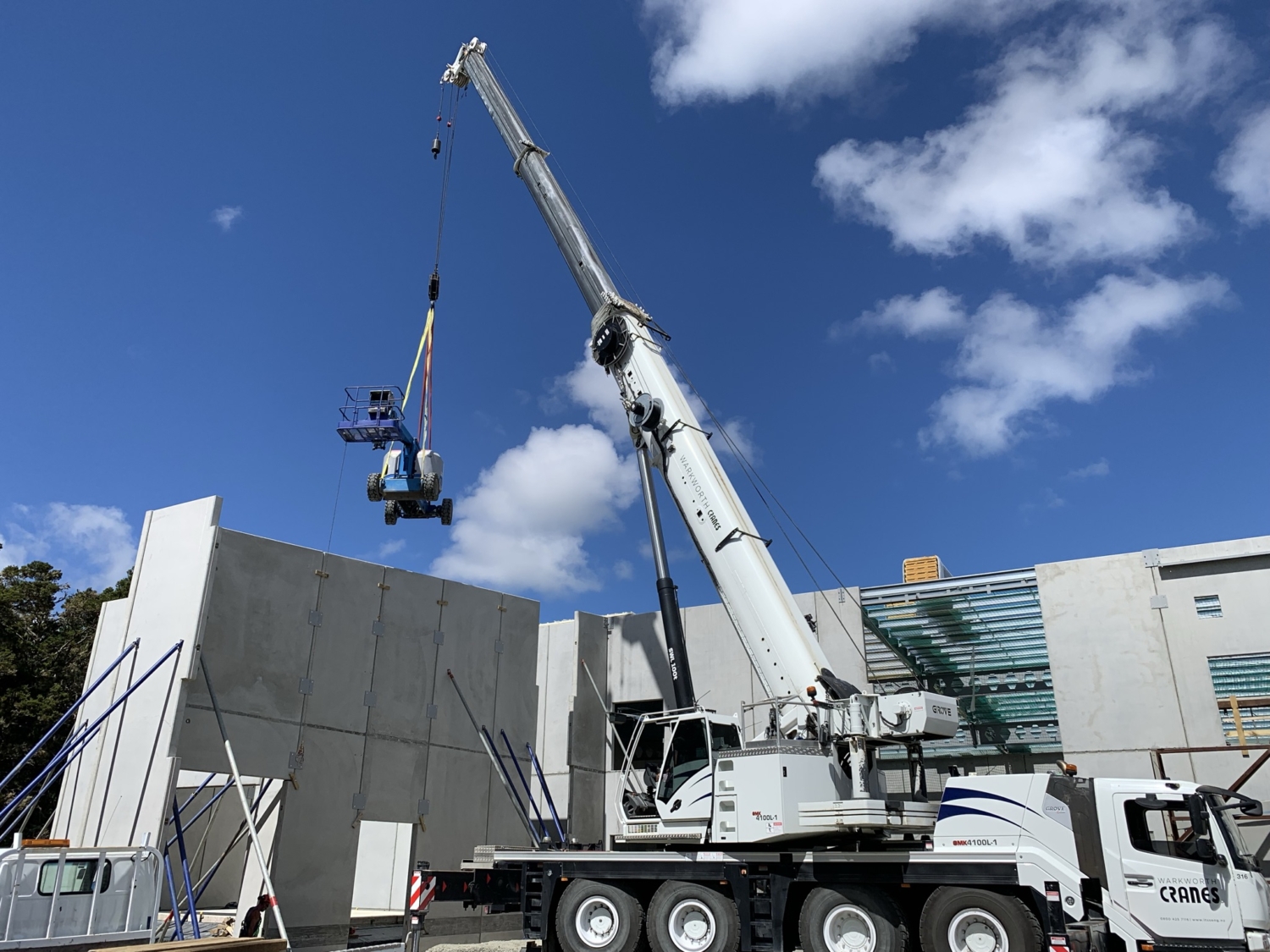
A successful crane lift is all in the planning, safety and site access detail.
When you see a crane arrive on site and make a lift, it can look relatively straightforward.
The crane sets up, the load is connected, it is lifted into position and the job moves on, however, a safe, efficient crane lift starts well before the hook goes anywhere near the load.
Before lifting begins, there are a number of things to work through, including the weight and size of the load, where it needs to go, crane access, ground conditions, surrounding hazards, the lift radius, traffic movements, site personnel and how everyone involved will communicate.
For larger or more complex lifts, a documented lift plan may also be required. WorkSafe advises that a lift plan will typically consider the load itself, its path of travel, potential strike hazards, who is involved and how communication will be managed.
The Warkworth Cranes team works with builders, project managers, engineers, contractors and property owners to help get these details sorted before lifting starts.
What information is needed before hiring a crane?
One of the first questions is simple: what are we lifting, and where does it need to go?
The crane team will usually need to understand:
- What is being lifted
- The approximate weight and dimensions
- Where the load will be collected from
- Where it needs to be placed
- The distance, or radius, the crane needs to reach
- What access is available for the crane
- Ground and site conditions
- Nearby buildings, structures, excavations or other obstacles
- Whether there are overhead power lines or services nearby
These details help determine what equipment is suitable for the job.
It’s not simply a case of choosing a crane based on how heavy the item is. A crane’s lifting capacity changes depending on how far it needs to reach, so both load weight and lift radius are important when selecting the right crane.
ITSS may recommend an onsite measure where the requirements cannot be accurately established over the phone.
Why is a site visit sometimes needed before a crane lift?
Photos, plans and measurements can tell us a lot, but some jobs are easier to assess in person.
A site visit allows the crane team to look at practical factors such as where the crane can enter, where it can set up, how much room is available for outriggers and boom movement, ground conditions and the actual distance between the crane position and the final location of the load.
WorkSafe specifically recommends considering safe site access, level and compacted ground, room for crane outriggers and boom extension, surrounding excavations and underground services before the crane arrives.
Getting this sorted ahead of time can prevent a situation where a crane arrives only to discover that access is restricted or the planned setup position is unsuitable.
How are site access and logistics planned for a crane?
A crane is only one part of what can be a busy work site.
There may also be trucks delivering materials, builders working nearby, excavators or other machinery operating, subcontractors arriving and people moving through the site.
Before a lift, consideration needs to be given to how the crane will safely enter and leave the site, where it will set up and how other vehicles and people will be kept clear of the lifting area.
For larger projects, this coordination can involve several contractors working together. WorkSafe guidance states that businesses sharing a work site need to consult, cooperate and coordinate where they share responsibility for managing risks.
Good crane planning is therefore also good logistics planning.
What happens when the crane arrives on site?
Planning doesn’t stop as soon as the crane turns up.
The operator will confirm that conditions match what was expected and check that the crane can be set up safely. Relevant site inductions and permits may also need to be completed.
Before lifting begins, the people involved need to understand the lift, their responsibilities, the hazards around them and the communication being used during the lift. WorkSafe also identifies equipment checks, operator competency and inspection documentation as important parts of safe crane operation.
If conditions on site have changed, the plan may need to change too.
Why does winter make crane planning more important?
Winter can add another layer to crane and site logistics, particularly when wet weather affects access and ground conditions.
A route that was firm and easy to access during dry weather may become soft, muddy or difficult for heavy equipment. The area originally intended for crane setup may also need to be reassessed.
Ground conditions matter because mobile cranes need to be positioned appropriately and supported on suitable ground. WorkSafe identifies soft, unstable or unsuitable ground as one of the potential causes of crane instability.
That doesn’t mean crane work stops during winter. It means planning ahead becomes even more important.
If you have a winter project coming up around Warkworth, Matakana, Wellsford, Mangawhai or the wider North Auckland area, speaking with the crane team early gives everyone more time to consider access, ground conditions and the best equipment for the job.
What types of lifts can Warkworth Cranes help with?
Warkworth Cranes has a varied fleet ranging from Hiab trucks through to mobile cranes with capacities from 18 tonnes to 100 tonnes.
This allows the team to assist with a wide range of lifting work, including:
- Structural steel installation
- Precast concrete panels and tilt slabs
- Building materials
- Machinery and equipment
- Water tanks
- Shipping containers
- Spas and swimming pools
- Residential construction
- Commercial and industrial projects
- General one-off lifts
ITSS also has structural steel fabrication and structural installation teams available, which can be particularly useful on projects where lifting is only one part of the overall job.
Crane Hire FAQs
Do I need a crane or a Hiab?
It depends on the load, required reach and site conditions.
A Hiab can be a practical option when transport and lifting can be combined, while other jobs require the capacity and reach of a mobile crane.
Contact the Warkworth Cranes team can recommend the most suitable option once they understand the job.
What size crane do I need?
Crane size is determined by more than the weight of the load.
The distance the crane needs to reach is also important. Providing the weight, dimensions, lift location and some information about site access is a good starting point.
For most jobs, a site visit prior will be recommended. Please contact us to arrange one.
How much notice should I give when booking a crane?
As much as possible, particularly for larger cranes or projects with specific timing requirements.
ITSS advises that larger mobile cranes can become booked up, so contacting the team early gives you the best chance of securing the crane you need for your preferred date.
Can a crane operate on wet ground?
Possibly, but ground conditions must be assessed to determine whether a crane can access and set up safely.
Wet or soft ground can affect the proposed crane position and may mean additional planning or site preparation is required.
Do you install precast concrete panels and tilt slabs?
Yes. Warkworth Cranes has experience with both residential and commercial precast and tilt slab projects around the Mahurangi area.
ITSS can provide crane and operator services, or experienced onsite staff can assist builders and project managers with installation beneath the hook. Panel props are also available for hire.
Can you tell me what crane I need over the phone?
For straightforward jobs, information provided over the phone may be enough to identify a suitable starting point.
For more complicated lifts, restricted sites or situations where the reach and ground conditions are difficult to establish, an onsite measure may be the better option. Get in touch with our team for advice.
Do you install precast concrete panels and tilt slabs?
Yes. Warkworth Cranes has experience with both residential and commercial precast and tilt slab projects around the Mahurangi area.
ITSS can provide crane and operator services, or experienced onsite staff can assist builders and project managers with installation beneath the hook. Panel props are also available for hire.
Planning a crane lift in Warkworth or North Auckland?
The earlier we understand what needs to be lifted and what the site looks like, the easier it is to plan the right approach.
Warkworth Cranes is part of ITSS Engineering and provides crane and Hiab hire for projects throughout Warkworth and the surrounding region. Our current fleet includes 18, 30, 60, and 100 tonne mobile cranes, along with Hiab and transport options.
Warkworth Cranes is also a member of the Crane Association of New Zealand and ITSS Engineering Limited is ISO 9001 certified.
Have a lift coming up?
Get in touch with the Warkworth Cranes team to discuss the load, site and timing, and we can help work out what you need.